18 January 1386
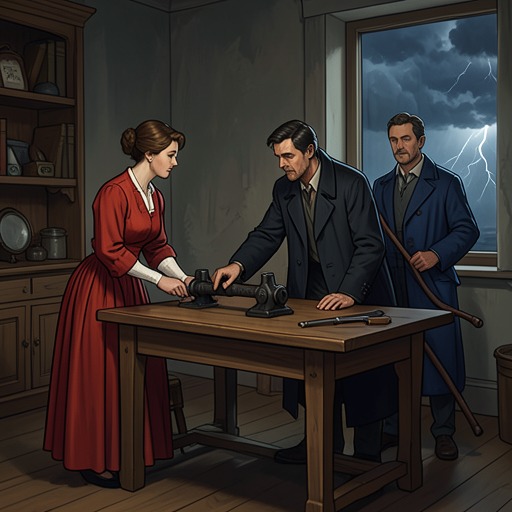
The Last Duel18 January 1386 is the date on which Marguerite de Carrouges said Jacques Le Gris attacked her at Capomesnil Castle while Jean de Carrouges was away. The date became a hinge between a private accusation and a public legal crisis: it shaped Le Gris’s alibi, the arguments about proof, and the later proceedings that carried the quarrel toward a judicial duel. The surviving account rests substantially on testimony and claims made by the parties, not on an independently established record of what happened that day.
The Day and Its Setting
Marguerite was at Capomesnil Castle while Jean was away on business in Paris. As the castle’s châtelaine, she was expected to oversee its household during his absences; her marriage also placed particular weight on her reputation for chastity and loyalty, which were connected to legitimate inheritance. Her father, Robert de Thibouville, had twice betrayed the French kings, leaving the family under a cloud before Marguerite’s marriage. These circumstances help explain why an accusation could threaten more than personal standing: the case exposed her to suspicion shaped by both her family history and the gendered demands placed on a noble wife.
The book’s reconstruction follows Jean’s court brief, which was based on Marguerite’s sworn testimony. Its account therefore presents the allegation as an allegation, rather than as an uncontested finding. The author also notes that some dialogue and details were added for continuity, a qualification that matters when distinguishing the legal record from the narrative reconstruction.
The timing of Nicole de Carrouges’s journey helps identify the date. She had gone to Saint-Pierre-sur-Dives for a legal proceeding whose date was known, and returned to Capomesnil several hours after the alleged attackers had left. The account consequently treats 18 January as the only possible day for the alleged crime. Marguerite fixed the date and time in her memory, anticipating that she would need to answer questions after telling Jean. He returned from Paris probably on 21 or 22 January; until then, she kept silent, in part because Le Gris had warned her that disclosure could bring danger from her husband as well as scandal from the accusation.
Le Gris’s Account of 18 January
Le Gris’s defense gave the day a different geography. In his account, he was in Argentan on the morning of 18 January. He said that Pierre Taillepie and Pierre Beloteau woke him, that he went with them to morning mass, and that Count Pierre of Alençon invited the three men to dine at his palace. After the meal, Le Gris said, he remained with his companions in his nearby room until the dinner hour, then attended the count in his bedchamber before returning to his own room for the night.
This account formed part of a wider itinerary intended to rule out the whole week. Le Gris said he had travelled from Argentan to visit Jean Beloteau on 15 January, returned to Argentan on 17 January at the count’s command, and left for Aunou on 19 January with his companions, returning on the 20th. Aunou referred to the estate of Aunou-le-Faucon, which Le Gris had acquired through Count Pierre from Marguerite’s father. Its appearance in the alibi was pointed: the estate connected the accused squire’s movements to the very family whose daughter had accused him.
Le Gris argued that Capomesnil was nine leagues from Argentan over difficult winter roads, a journey that would require at least a full day. Jean answered that Le Gris was wealthy and had abundant good horses, making a rapid journey possible. The disagreement was not merely about distance. It turned on whether the claimed public company and movements in Argentan excluded a journey to Capomesnil, and whether the court would treat the date as sufficiently specific. A decree of 1306 required a nobleman seeking a duel to name the time and date of the alleged crime; Le Gris may have hoped that any vagueness would disqualify Jean’s case.
Pregnancy and the Problem of Proof
Marguerite’s pregnancy was apparently not raised by either man in court, though it acquired potential significance as the inquiry continued. She had apparently been childless for the first five or six years of her marriage, became pregnant around January 1386, and gave birth later that year. The evidence cannot establish whether the child was Jean’s, Le Gris’s, or another man’s, and the chronology alone does not settle paternity.
The pregnancy also intersected with a period belief about conception. A widely accepted theory, associated with Galen, held that conception required a woman’s participation; medieval law accordingly recognized that rape could not cause pregnancy. The belief could make pregnancy appear to count against a woman’s account, regardless of what had happened. The book presents this as a possible concern for the Parlement of Paris, not as proof that the magistrates reached a particular conclusion about Marguerite.
From a Date to a Public Cause
After Jean returned, Marguerite’s accusation became a dispute between a troublesome vassal and Count Pierre of Alençon’s favorite. In late January the count investigated by questioning Sir Bernard de La Tour, Jean’s brother-in-law, and Jean Crespin, a squire who knew the parties. They reported that Jean and Marguerite had spoken of the accusation in several places and wished to bring their complaint to the count. Count Pierre convened a court of prelates, knights, council members, and other experienced men. Though responsible for hearing disputes between his vassals, he was not an impartial figure: Le Gris was his favorite.
The matter later reached the Parlement of Paris, where both Jean and Le Gris had to provide pledges to ensure they would answer future summonses. Six noblemen guaranteed each man’s appearance. Their involvement multiplied the number of people drawn into the quarrel, which spread from a seigneurial dispute in Normandy to a subject of debate at the royal court and beyond. In July, Marguerite’s cousin Thomin du Bois challenged Adam Louvel, whom Jean had named as Le Gris’s accomplice, to a second wager of battle before Charles VI at the Château de Vincennes. Subsequent arrests and questioning widened the inquiry further; neither Louvel nor a maidservant questioned in connection with the case confessed.
The date thus became more than a point on a calendar. It supplied the test around which the competing accounts of presence, distance, memory, and credibility were organized. The case ultimately reached a judicial duel, whose rules sought to place the combatants on equal ceremonial footing even though Jean had more military experience and Le Gris was larger, stronger, and wealthier. Once combat began, those formal gestures did not make the violence chivalrous or remove the uncertainty of the outcome. The process made the truth of 18 January a public matter, but it could not turn the date itself into independent proof of what had occurred.